Overview
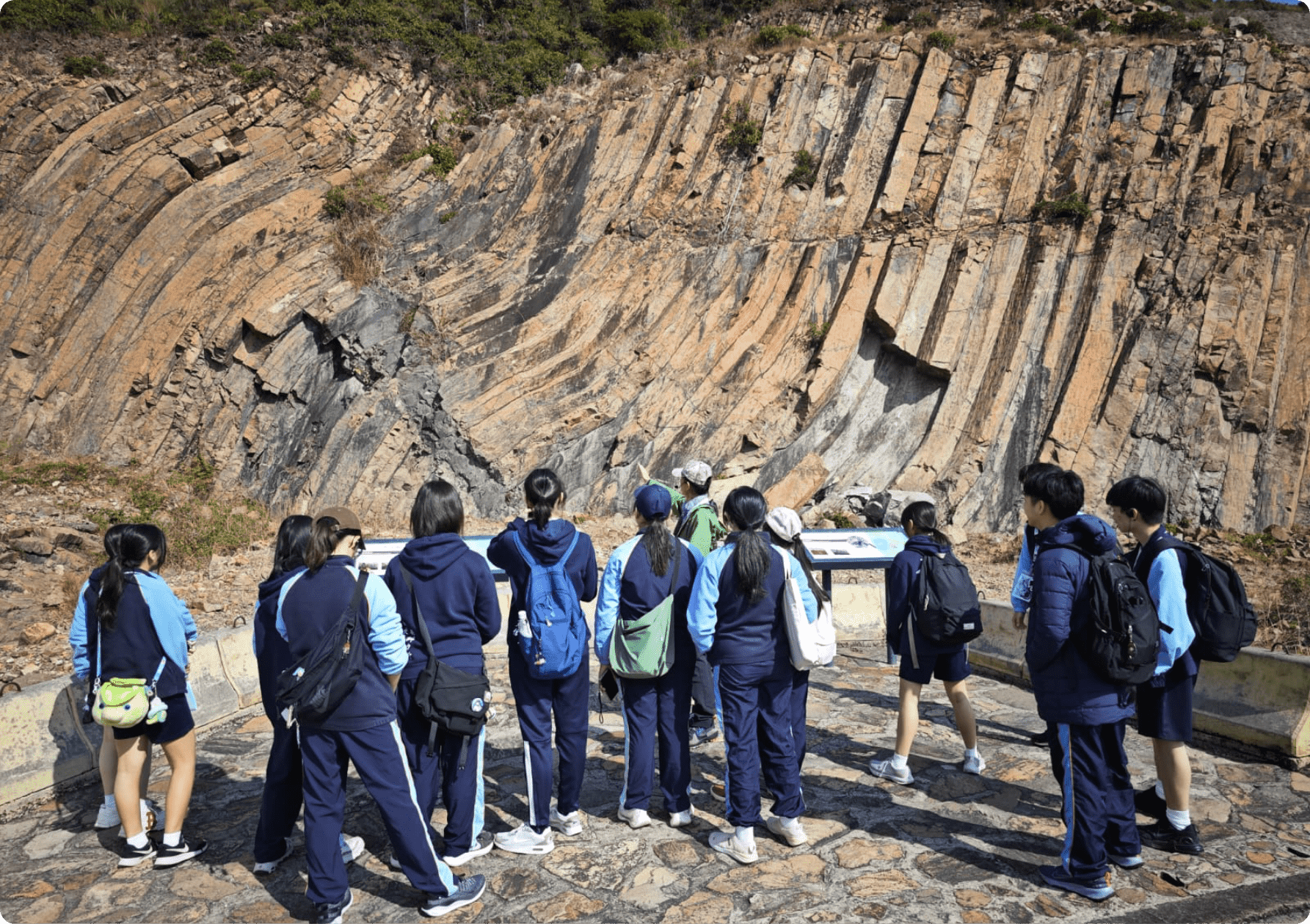
Geography education in A-School develops students' knowledge of the physical environment and human societies, using case studies from Hong Kong, China, and the wider world. The curriculum emphasizes understanding spatial patterns through maps, data handling, and fieldwork skills. Students learn concepts such as weather and climate, landforms, resources, population, migration, urbanization, and global connections. Our learning activities often combine classroom investigation with enquiry-based learning, encouraging critical thinking about environmental sustainability and risk management. Ultimately, our goal is to develop geographic literacy and foster informed, responsible citizenship.
Curriculum Framework
| Hong Kong Diploma of Secondary Education (HKDSE) |
Compulsory Part:
- Opportunities and risks – Is it rational to live in hazard-prone areas?
- Managing river and coastal environments – A continuing challenge
- Changing industrial location – How and why does it change over space and time?
- Building a sustainable city – Are environmental conservation and urban development mutually exclusive?
- Combating famine – Is technology a panacea for food shortages?
- Disappearing green canopy – Who should pay for the massive deforestation in rainforest regions?
- Climate change – Long term fluctuation or irreversible trend?
|
Elective Part:
- Dynamic earth
- Weather and climate
|
| International General Certificate of Secondary Education (IGCSE) (0460) |
-
Geographical Themes
- Population and settlement
- The natural environment
- Economic development
-
Geographical Skills
-
Alternative to Coursework
|
| Pearson Edexcel International Advanced Level in Geography (YGE01) |
-
Global Challenges
- World at risk
- Going global
-
Geographical Investigations
- Crowded coasts
- Urban problems, planning and regeneration
-
Contested Planet
- Atmosphere and weather systems
- Biodiversity under threat
- Water conflicts
- Bridging the development gap
-
Researching Geography
- Option 1: Tectonic activity and hazards
- Option 2: Feeding the world’s people
- Option 3: Cultural diversity: people and landscapes
- Option 4: Human health and disease
|