Music Ensemble
Junior School (G1-4)
Curriculum Objectives
Aesthetic development plays a key role in A-School to foster students’ personal development. Music ensemble is a chance for students to learn an instrument in a group setting.
Students can apply the music theory they have learnt in the music lessons. Students will receive effort grades according to their class performance and attitude. We hope the music ensemble lesson can be an engaging and exhilarating experience for all our junior school students.
Ensemble Class Arrangement
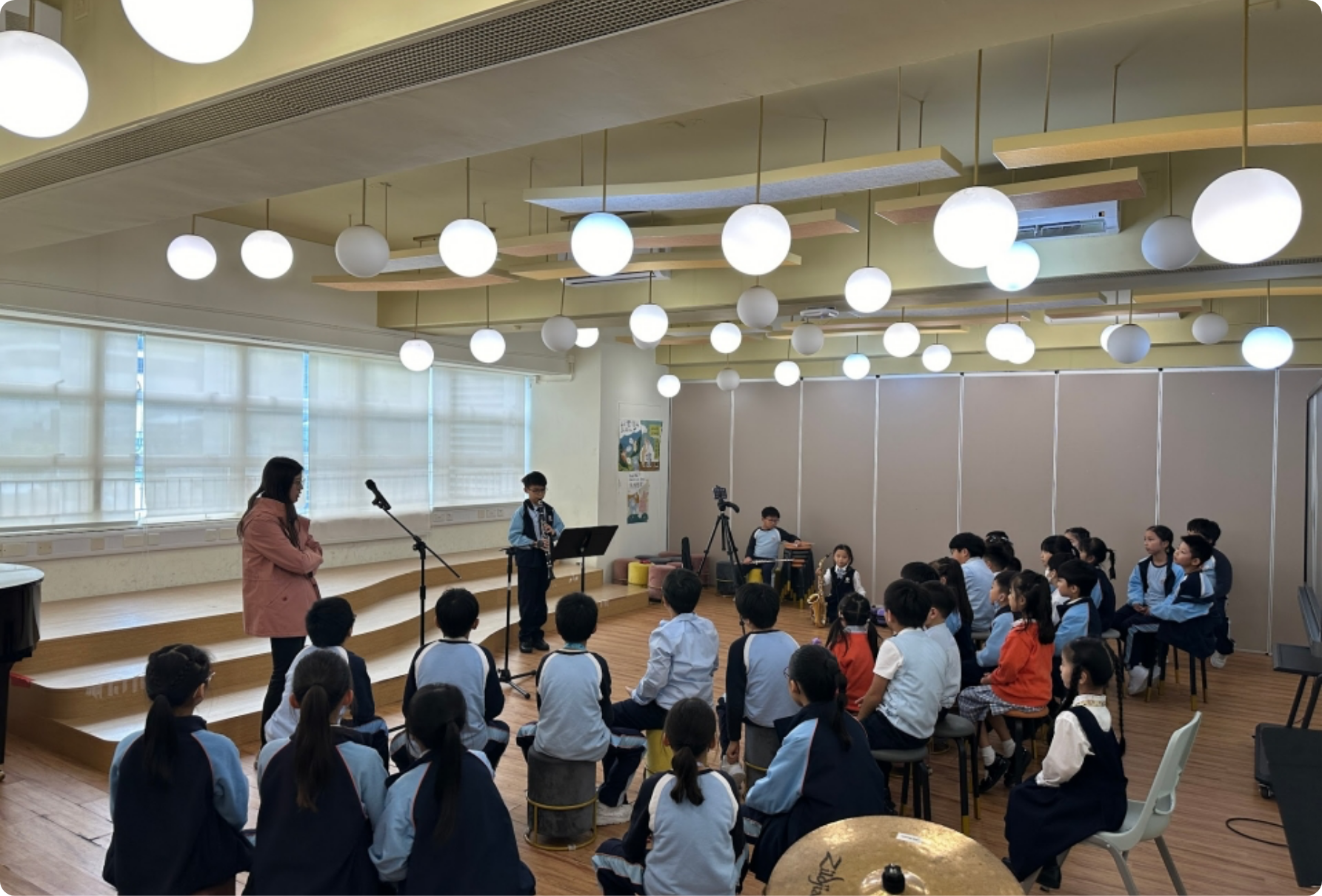
From G1 to G4, ensemble lessons take place once per week in three small groups (10-12 students), namely Winds (G1–4), Strings (G1–4), Keyboard (G4) and Percussion (G1–3). 3 groups will be using different venues.
Students will learn about the basic knowledge and techniques of one of the following instruments:
- Flute
- Trumpet
- Clarinet
- Trombone
- Oboe
- Tuba
- Saxophone
- French Horn
- Violin
- Viola
- Cello
- Double Bass
- Acoustic piano
- Electric piano
- Drumset
- Keyboard percussion (e.g. Glockenspiel, Xylophone)
- Hand percussion (e.g. Tambourine, shaker, triangle)
For Winds and Strings groups, students need to have their own instrument and bring it to school when they are having an ensemble lesson. Keyboard/ Percussion class students will use the piano/keyboard/percussion instruments in school during the ensemble lesson. Students will receive materials/music scores prepared by teachers according to students’ levels, they will play a music piece together, and each student has their part to play. Students are not only learning from the teachers but also learning from peers.
Ensemble Class Performance
A-school provides different opportunities for students to showcase their talents and play music together. It helps them develop their confidence and gain appreciation from their peers. We have in-class performance, lunchtime concert and year-end concert to consolidate their learning.