
English Language
Curriculum Objectives
Reading
- To read and demonstrate an understanding of a variety of literary, graphic, and informational texts, using a range of strategies to construct meaning;
- To recognise a variety of text forms, text features, and stylistic elements and demonstrate understanding of how they help communicate meaning;
- To use knowledge of words and cueing systems to read fluently;
- To reflect on and identify their strengths as readers, areas for improvement, and the strategies they found most helpful before, during, and after reading.
Writing
- To generate, gather, and organise ideas and information to write for an intended purpose and audience;
- To draft and revise their writing, using a variety of informational, literary, and graphic forms and stylistic elements appropriate for the purpose and audience;
- To use editing, proofreading, and publishing skills and strategies, and knowledge of language conventions, to correct errors, refine expressions, and present their work effectively;
- To reflect on and identify their strengths as writers, areas for improvement, and the strategies they found most helpful at different stages in the writing process.
Oral Communication
- To listen in order to understand and respond appropriately in a variety of situations for a variety of purposes;
- To use speaking skills and strategies appropriately to communicate with different audience for a variety of purposes;
- To reflect on and identify their strengths as listeners and speakers, areas for improvement, and the strategies they found most helpful in oral communication situations.
Objectives – Attitude, Value & Belief
- Attitude: To develop students’ enjoyment, confidence and independence as language users and learners.
- Value: To develop students’ competence in learning and using language in a broad range of contexts.
- Belief: To develop students’ knowledge and understanding of texts and how texts are structured within different contexts.
Curriculum Framework
- The English language curriculum at A-School aims to encourage students to develop positive attitude towards learning English, to develop students’ ability in using language effectively and to enable critical reflection on how language works.
- Our goal is to maintain high standards in teaching and learning by offering abundant communication opportunities. We aim to balance accuracy and fluency in the early years of primary school English learning.
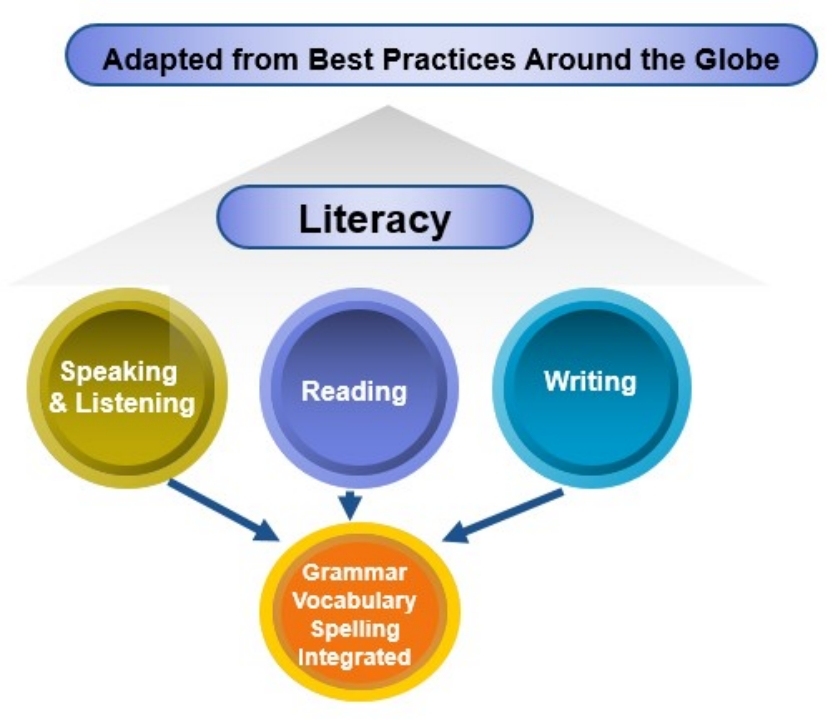
- Our method is focused on a balanced literacy approach (speaking and listening, reading and writing). In reading, teaching and learning activities include guided reading, shared reading/reading aloud, phonics, personal responses, and independent reading. Students engage in author studies, novel studies and literature circles. In writing, learning activities include a focus on different text types (fictional and factual), process writing approach, modelled writing, guided writing, and independent writing. In speaking and listening, students engage in several activities such as retelling, role-playing, drama activities, Show and Tell, Discovery Quests, Socratic Circles and debates. Grammar is taught in context through reading and writing. The teaching strategies cater for learners with different needs through differentiated tasks within a classroom and across classrooms.
Oral Communication Activities
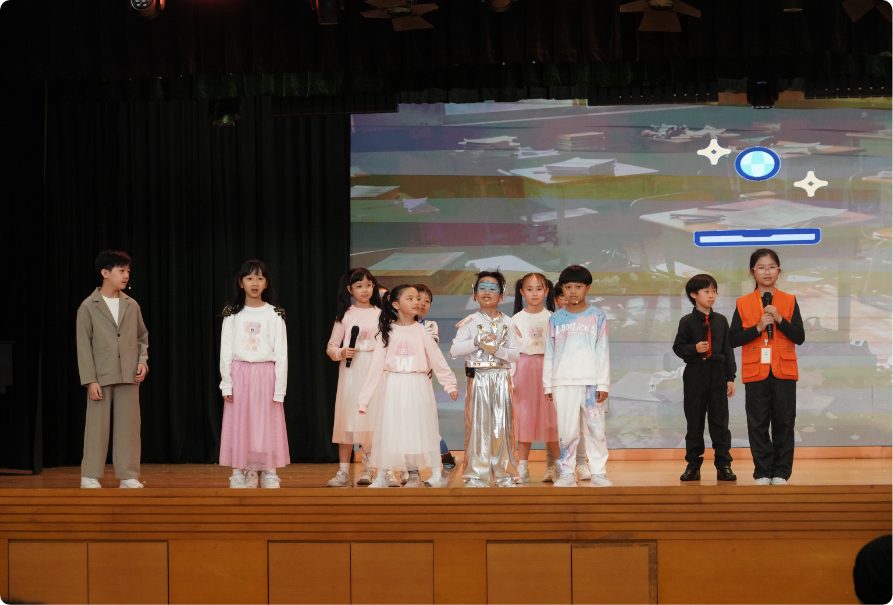
Each and every student is given opportunities to engage in oral communication activities to strengthen fluency and language skills and develop confidence in public speaking. Activities such as Show and Tell are a gentle introduction to the world of presentations for lower primary students. Once they have built up the confidence, activities such as Discovery Quests enable learners to exercise choice in topics as well as build research skills for presentation. In the upper grades, students learn debating skills through solo, paired and group debates.
Reading
Reading is the backbone of our literacy programme. Motivation is the most important factor in promoting English language reading. Starting with focusing on fluency in the younger primary years, we move towards accuracy and mastery in the upper primary years. In the early years, the focus is on leisure reading, levelled reading and developing motivation and a love for reading English texts. The upper primary reading programme builds on that foundation to develop critical reading skills of students through the in-depth study of classic as well as contemporary texts, both prose and poetry.
Writing
We believe a child who can speak, can definitely write. To this end, ample phonemic awareness activities make up a significant part of the lower primary curriculum. A scaffolded approach towards writing is adopted incorporating modelled/shared/independent writing. With a focus on text types, students write for authentic purposes. In first grade, students engage in cooking activities before embarking on writing recipes and procedures.